

TITLE_NAME :
03/20/2026 - 08/23/2026
FOMU - Fotomuseum Antwerp
Waalsekaai 47
2000 Antwerp
The Heart of the Matter is the first retrospective of influential American artist Carrie Mae Weems (1953) in Belgium. Through her incisive photographic works and video installations she explores themes of race, gender, power and memory.
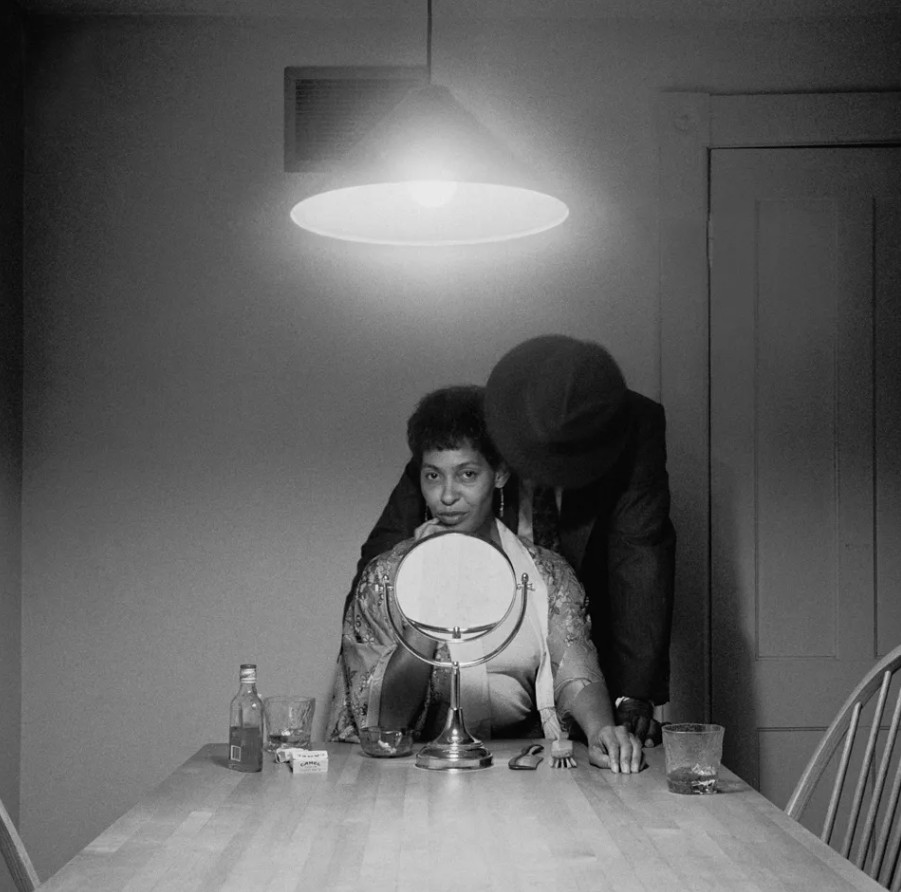
Weems often appears in her photos as a subject, a guide and a muse. Her experiences as a Black woman inform her exploration of ‘forgotten’ histories. She reveals places that are often left out of the picture: from intimate kitchen table settings to film sets, and from African-American churches to former plantations. Her work invokes personal stories to address the complexities and injustices of the world around us.
The exhibition comprises more than 100 photographs and videos, including landmark works such as Museums (2006) and Kitchen Table Series (1990). Especially for this exhibition, Weems created the series Preach (2024), which points to the importance of faith both personally and societally. In this series, the art and architecture of spirituality emerge as powerful forms of resistance.
FOMU - Fotomuseum Antwerp
Waalsekaai 47
2000 Antwerp
The Heart of the Matter is the first retrospective of influential American artist Carrie Mae Weems (1953) in Belgium. Through her incisive photographic works and video installations she explores themes of race, gender, power and memory.
Weems often appears in her photos as a subject, a guide and a muse. Her experiences as a Black woman inform her exploration of ‘forgotten’ histories. She reveals places that are often left out of the picture: from intimate kitchen table settings to film sets, and from African-American churches to former plantations. Her work invokes personal stories to address the complexities and injustices of the world around us.
The exhibition comprises more than 100 photographs and videos, including landmark works such as Museums (2006) and Kitchen Table Series (1990). Especially for this exhibition, Weems created the series Preach (2024), which points to the importance of faith both personally and societally. In this series, the art and architecture of spirituality emerge as powerful forms of resistance.