

TITLE_NAME :
01/09/2026 - 03/15/2026
Griffin Museum of Photography
67 Shore Road
MA 01890 Winchester
https://griffinmuseum.org/show/john-willis_md/
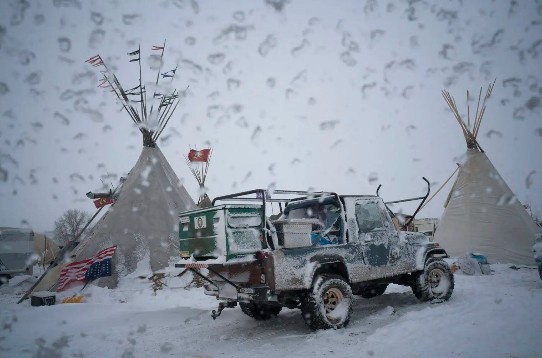
John Willis’s projects A View from the Rez and Mni Wiconi showcase his long-term engagement with the land of Pine Ridge and Standing Rock by revealing how the landscape itself becomes both witness and participant in the struggles and continuities of Native life. In A View from the Rez, Willis photographs everyday environments—open plains, weathered structures, improvised memorials – that underscore how land records each interaction, each burden, each assertion of presence. The terrain is a living archive of survival and sovereignty, shaped by generations who have remained rooted despite imposed borders and historic dispossession. In Mni Wiconi, created during the resistance at Standing Rock, Willis turned his lens toward the ways land and water become the focus in the defense of Indigenous rights. Here, space is not neutral: it is sacred, threatened, and fiercely protected. Across both projects, Willis shows that land is not simply a place to stand but a relationship—one defined by stewardship, struggle, and the unbroken connection between people and the places that sustain them.
Griffin Museum of Photography
67 Shore Road
MA 01890 Winchester
https://griffinmuseum.org/show/john-willis_md/
John Willis’s projects A View from the Rez and Mni Wiconi showcase his long-term engagement with the land of Pine Ridge and Standing Rock by revealing how the landscape itself becomes both witness and participant in the struggles and continuities of Native life. In A View from the Rez, Willis photographs everyday environments—open plains, weathered structures, improvised memorials – that underscore how land records each interaction, each burden, each assertion of presence. The terrain is a living archive of survival and sovereignty, shaped by generations who have remained rooted despite imposed borders and historic dispossession. In Mni Wiconi, created during the resistance at Standing Rock, Willis turned his lens toward the ways land and water become the focus in the defense of Indigenous rights. Here, space is not neutral: it is sacred, threatened, and fiercely protected. Across both projects, Willis shows that land is not simply a place to stand but a relationship—one defined by stewardship, struggle, and the unbroken connection between people and the places that sustain them.