

TITLE_NAME :
01/30/2026 - 04/30/2026
Hans P. Kraus Jr. Inc.
962 Park Avenue
10028 New York
Hans P. Kraus Jr. Fine Photographs is pleased to present British Landscapes: Early Photographs from 30 January through 30 April 2026. Featured work is primarily from the 19th century, by William Henry Fox Talbot, Sir John Herschel, Roger Fenton, Captain Horatio Ross, Payne Jennings, and others. The exhibition opens in conjunction with Master Drawings New York.
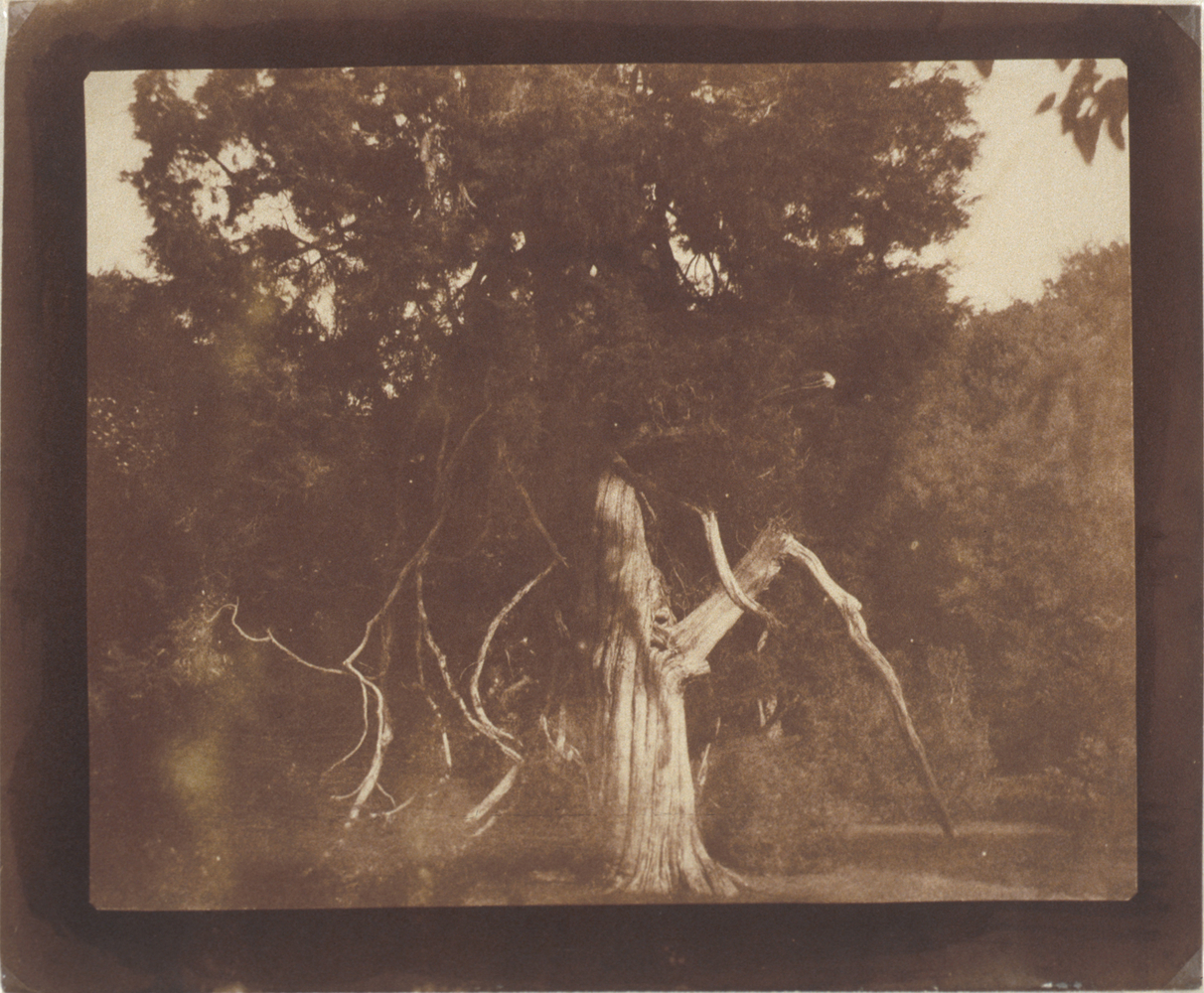
Among the highlights is the salt print from a negative calotype made in the early 1840s of a leafless majestic oak on the grounds of William Henry Fox Talbot's home at Lacock Abbey, captured by Talbot soon after his invention of photography. In this landscape masterpiece, Talbot (1800-1877) emphasizes the oak's size and structure in silhouette against the clear light of winter, offering a rich contrast to other trees along the horizon. It also signals just how far Talbot had advanced since his time in Italy, in 1833, when he struggled to achieve results with the camera lucida, the optical device patented as a drawing aid at the beginning of the 19th century.
Hans P. Kraus Jr. Inc.
962 Park Avenue
10028 New York
Hans P. Kraus Jr. Fine Photographs is pleased to present British Landscapes: Early Photographs from 30 January through 30 April 2026. Featured work is primarily from the 19th century, by William Henry Fox Talbot, Sir John Herschel, Roger Fenton, Captain Horatio Ross, Payne Jennings, and others. The exhibition opens in conjunction with Master Drawings New York.
Among the highlights is the salt print from a negative calotype made in the early 1840s of a leafless majestic oak on the grounds of William Henry Fox Talbot's home at Lacock Abbey, captured by Talbot soon after his invention of photography. In this landscape masterpiece, Talbot (1800-1877) emphasizes the oak's size and structure in silhouette against the clear light of winter, offering a rich contrast to other trees along the horizon. It also signals just how far Talbot had advanced since his time in Italy, in 1833, when he struggled to achieve results with the camera lucida, the optical device patented as a drawing aid at the beginning of the 19th century.