

TITLE_NAME :
05/19/2026 - 06/27/2026
Galerie Tanit Munich
Maximilianstr. 45
80538 Munich
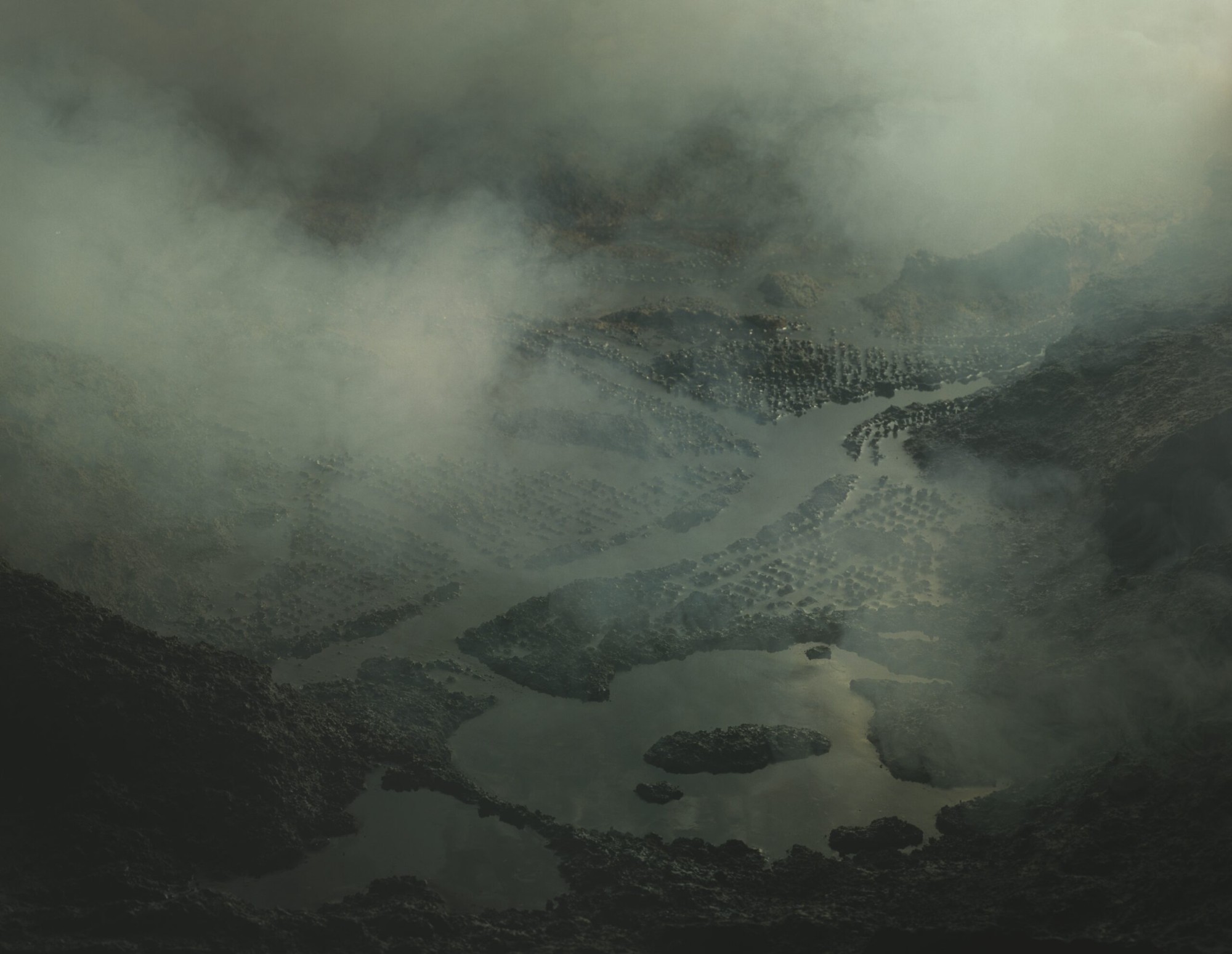
This body of work examines the formation of perception and the ways in which photography mediates our relationship to the world. Even though photographic images may be staged or manipulated, they remain culturally embedded as forms of evidence—circulating through social media, news media, and personal snapshots as if they were transparent records of reality. At the core of Sonja Braas’s practice lies this tension: between trust and doubt, between what appears self-evident and what is revealed as constructed.
The photographs evoke idealized visions of the natural world; at once idyllic, sublime, or catastrophically destructive, yet they originate in meticulously constructed sets that the artist builds and subsequently photographs. A tornado formed from wire and cotton, an iceberg modeled in concrete, or a jungle assembled from pipe cleaners all appear to offer the viewer an imagined escape: into beauty, into wilderness, into a world seemingly untouched by human presence. Their large scale (up to 60 × 82 inches) intensifies this effect, enveloping the viewer through their physical presence, theatricality, and visual drama. This format encourages emotional immersion while simultaneously disclosing subtle traces of fabrication: the edges of the set, the material seams, and constructed details that interrupt illusion. These moments of exposure shift the experience from immersion to awareness. The photograph can no longer function as a stable window onto nature; instead, the viewer is positioned within a continuous negotiation between attraction and skepticism, directed not only at the image but by the act of looking itself.
Braas develops each series as a cohesive whole, beginning with preparatory drawings that map out the images in advance, akin to a storyboard. The construction of the sets is deliberately slow, often unfolding over months or years for a single photograph. Building, sculpting, and painting these environments involves iterative processes of trial and error, where accidents and material contingencies frequently open unexpected directions and alter the original conception. The eventual dismantling and destruction of the sets underscores the primacy of the photograph: the scene has existed materially, but only provisionally, and now survives solely as its image.
Galerie Tanit Munich
Maximilianstr. 45
80538 Munich
This body of work examines the formation of perception and the ways in which photography mediates our relationship to the world. Even though photographic images may be staged or manipulated, they remain culturally embedded as forms of evidence—circulating through social media, news media, and personal snapshots as if they were transparent records of reality. At the core of Sonja Braas’s practice lies this tension: between trust and doubt, between what appears self-evident and what is revealed as constructed.
The photographs evoke idealized visions of the natural world; at once idyllic, sublime, or catastrophically destructive, yet they originate in meticulously constructed sets that the artist builds and subsequently photographs. A tornado formed from wire and cotton, an iceberg modeled in concrete, or a jungle assembled from pipe cleaners all appear to offer the viewer an imagined escape: into beauty, into wilderness, into a world seemingly untouched by human presence. Their large scale (up to 60 × 82 inches) intensifies this effect, enveloping the viewer through their physical presence, theatricality, and visual drama. This format encourages emotional immersion while simultaneously disclosing subtle traces of fabrication: the edges of the set, the material seams, and constructed details that interrupt illusion. These moments of exposure shift the experience from immersion to awareness. The photograph can no longer function as a stable window onto nature; instead, the viewer is positioned within a continuous negotiation between attraction and skepticism, directed not only at the image but by the act of looking itself.
Braas develops each series as a cohesive whole, beginning with preparatory drawings that map out the images in advance, akin to a storyboard. The construction of the sets is deliberately slow, often unfolding over months or years for a single photograph. Building, sculpting, and painting these environments involves iterative processes of trial and error, where accidents and material contingencies frequently open unexpected directions and alter the original conception. The eventual dismantling and destruction of the sets underscores the primacy of the photograph: the scene has existed materially, but only provisionally, and now survives solely as its image.