

TITLE_NAME :
09/30/2026 - 01/25/2027
Musée de l'Orangerie
Jardin des Tuileries
75001 Paris
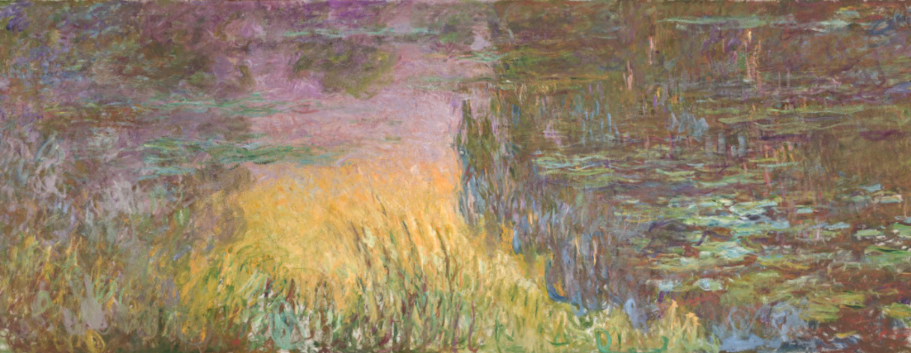
2026 will be the centenary of the death of the painter Claude Monet (1840-1926). To mark this anniversary, the Musée de l’Orangerie is organizing an exhibition focusing on his body of work’s relationship with time. In the 1870s, he was regarded as the impressionist artist par excellence, even though he only took part in five of the group’s exhibitions. In the 1890s, with such series as Les cathédrales [The Cathedrals], Les meules [The Haystacks] and Les peupliers [The Poplars], the painter adopted an approach that almost seemed to be dissecting time, until the final testament of the Nymphéas [Water Lilies] series, which solved the seemingly insurmountable problem of fragmentation and so merged into the continuum. A selection of almost forty of Monet’s paintings, mostly from the Musée d’Orsay’s and Musée Marmottan Monet’s collections, along with loans from French and international public and private collections, will highlight these successive phases, with particular emphasis on the Nymphéas. From this new angle, and taking an objective approach requiring input from various research fields, the exhibition is set to reexamine a body of work whose significance, a hundred years on, is more fundamental than ever.
Musée de l'Orangerie
Jardin des Tuileries
75001 Paris
2026 will be the centenary of the death of the painter Claude Monet (1840-1926). To mark this anniversary, the Musée de l’Orangerie is organizing an exhibition focusing on his body of work’s relationship with time. In the 1870s, he was regarded as the impressionist artist par excellence, even though he only took part in five of the group’s exhibitions. In the 1890s, with such series as Les cathédrales [The Cathedrals], Les meules [The Haystacks] and Les peupliers [The Poplars], the painter adopted an approach that almost seemed to be dissecting time, until the final testament of the Nymphéas [Water Lilies] series, which solved the seemingly insurmountable problem of fragmentation and so merged into the continuum. A selection of almost forty of Monet’s paintings, mostly from the Musée d’Orsay’s and Musée Marmottan Monet’s collections, along with loans from French and international public and private collections, will highlight these successive phases, with particular emphasis on the Nymphéas. From this new angle, and taking an objective approach requiring input from various research fields, the exhibition is set to reexamine a body of work whose significance, a hundred years on, is more fundamental than ever.