

TITLE_NAME :
01/31/2026 - 07/20/2026
Art Institute Chicago
111 S Michigan Ave,
IL 60603 Chicago
https://www.artic.edu/exhibitions/10584/lucas-samaras-sitting-standing-walking-looking
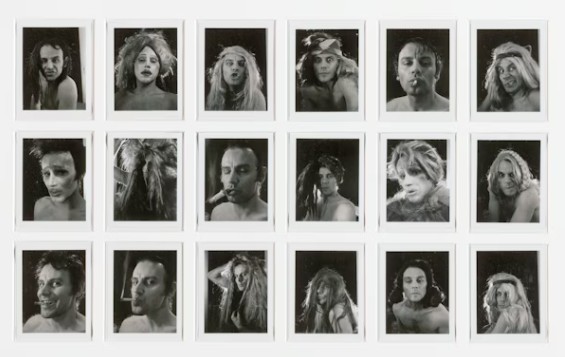
Over seven decades, Lucas Samaras developed an utterly unique approach to art making. While he experimented with a wide range of materials, his own body and belongings were the primary subject of his photographs, sculptures, and drawings.
This exhibition focuses on Samaras’s innovative photographs, which unite his background in performance and his technical achievements with instant process film, particularly Polaroid. This brand-name film produced a negative and positive simultaneously, eliminating the need for a darkroom or external processing. Such independence and privacy appealed to Samaras who wanted to make pictures of himself in his own home without involving others. The artist, however, didn’t use the mass-marketed film in a straightforward manner but really pushed its limits, frequently moving the color pigment around to shapeshift his body, blur the boundary between himself and his surroundings, and radically restructure his compositions.
Art Institute Chicago
111 S Michigan Ave,
IL 60603 Chicago
https://www.artic.edu/exhibitions/10584/lucas-samaras-sitting-standing-walking-looking
Over seven decades, Lucas Samaras developed an utterly unique approach to art making. While he experimented with a wide range of materials, his own body and belongings were the primary subject of his photographs, sculptures, and drawings.
This exhibition focuses on Samaras’s innovative photographs, which unite his background in performance and his technical achievements with instant process film, particularly Polaroid. This brand-name film produced a negative and positive simultaneously, eliminating the need for a darkroom or external processing. Such independence and privacy appealed to Samaras who wanted to make pictures of himself in his own home without involving others. The artist, however, didn’t use the mass-marketed film in a straightforward manner but really pushed its limits, frequently moving the color pigment around to shapeshift his body, blur the boundary between himself and his surroundings, and radically restructure his compositions.