

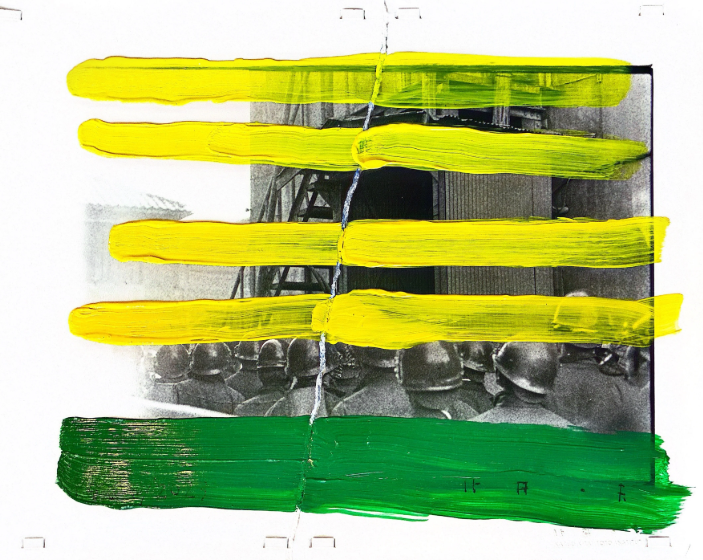
Kazuo Kitai, Iroha, 1964/2023 - Courtesy of the artist and Écho 119.
TITLE_NAME :
Kazuo Kitai — IROHA 1,2,3 !
30/04/2026 - 25/07/2026
Écho 119
1 rue des Minimes
75003 Paris
https://www.galerieecho119.com/en-en
Kazuo Kitai, still too little known in Europe, is nevertheless one of the key figures in Japanese documentary photography and is recognized in the Japanese archipelago as one of the great masters of his generation. For over 60 years, he has documented the social movements of his country—from the student protests of the 1960s to the peasant struggles against Narita International Airport, the transformations of the Japanese countryside, and the daily lives of working-class neighborhoods. His profoundly humanist perspective offers a broad panorama of the transformations of Japanese society since the 1960s. IROHA, which can be translated as "a, b, c", marks a decisive turning point in his career. While this photographer has always recognized himself in the struggles of those he photographed, participating in rebellions as much as he documented them, at over 80 years old, he revisits his own archives with an equally radical gesture: tearing, then patching, and finally covering with paint the prints of his early work — those made at 20, at the time of the student protest movements — it is now against his own photography that he rebels.
30/04/2026 - 25/07/2026
Écho 119
1 rue des Minimes
75003 Paris
https://www.galerieecho119.com/en-en
Kazuo Kitai, still too little known in Europe, is nevertheless one of the key figures in Japanese documentary photography and is recognized in the Japanese archipelago as one of the great masters of his generation. For over 60 years, he has documented the social movements of his country—from the student protests of the 1960s to the peasant struggles against Narita International Airport, the transformations of the Japanese countryside, and the daily lives of working-class neighborhoods. His profoundly humanist perspective offers a broad panorama of the transformations of Japanese society since the 1960s. IROHA, which can be translated as "a, b, c", marks a decisive turning point in his career. While this photographer has always recognized himself in the struggles of those he photographed, participating in rebellions as much as he documented them, at over 80 years old, he revisits his own archives with an equally radical gesture: tearing, then patching, and finally covering with paint the prints of his early work — those made at 20, at the time of the student protest movements — it is now against his own photography that he rebels.